Free On-Site Inspection
Real leak tracking
We trace water entry points at flashing, valleys, vents, skylights, and transitions instead of guessing based on interior stains.
Serving Erie, Pennsylvania & surrounding areas
Mon–Fri 8am–6pm · Sat 9am–2pm
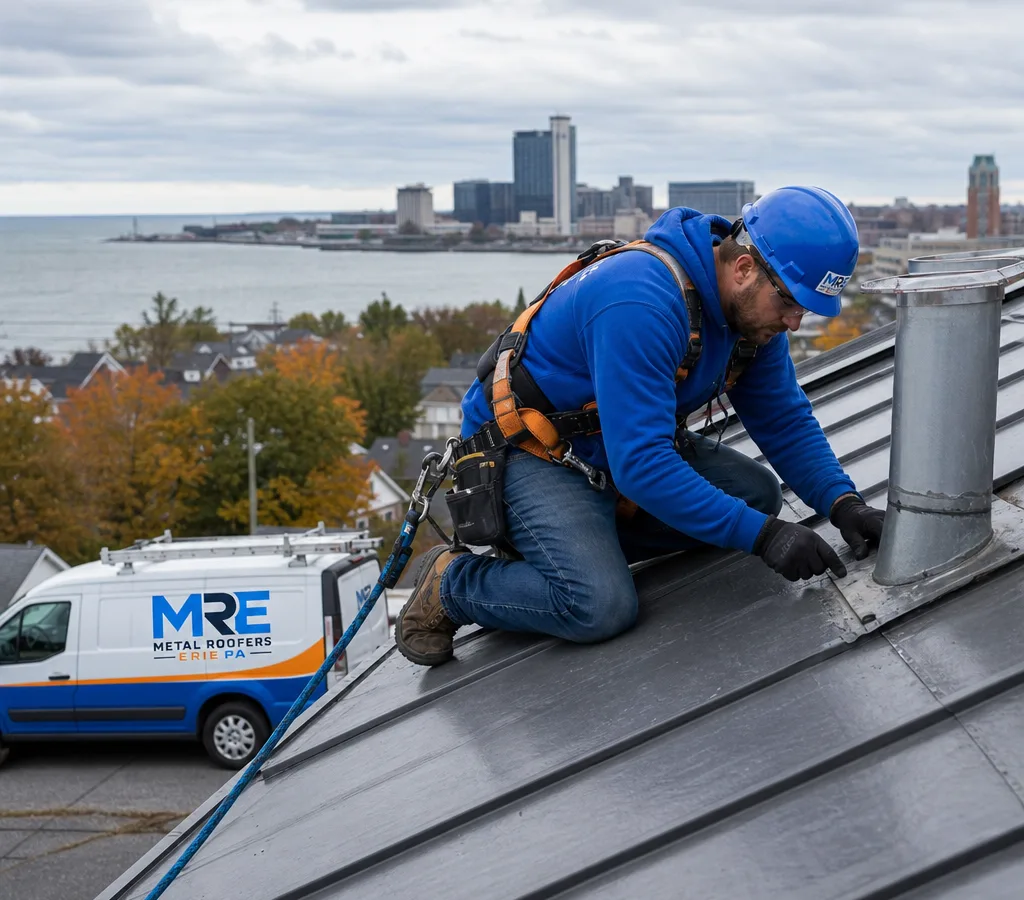
Roof repair service · Erie, Pennsylvania
Leaks, loose flashing, storm damage, or persistent drips around vents. Get a careful roof inspection, a clear written scope, and repairs that hold up to Lake Erie wind, rain, and freeze-thaw cycles.
Find the source first
Searching for Erie PA roof repair usually means something is already going wrong: a ceiling stain that keeps spreading, water at the chimney after a hard rain, or shingles you noticed after a windy day off Presque Isle Bay. Roof problems rarely stay small. Water follows seams, nails, and decking joints, then shows up far away from the real entry point.
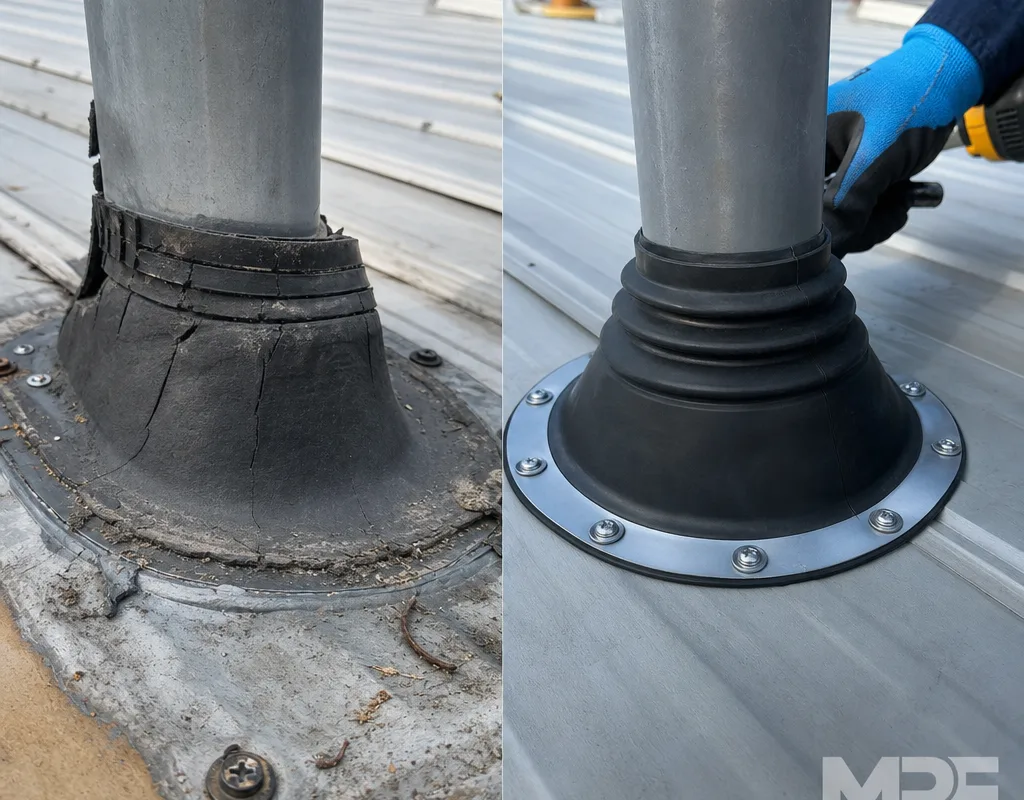
Metal Roofers Erie PA handles Erie PA roof repair with a straightforward approach: find the actual source, document what we see, and fix the failure point with the right materials for the roof you have. That may mean replacing damaged shingles, resetting step flashing, repairing a pipe boot, sealing fasteners on metal panels, or correcting a transition detail where two roof planes meet.
Erie's weather is tough on roofs. Wind-driven rain can work under lifted shingles and loosened flashing. Freeze-thaw cycles can open small gaps at sealants and penetrations, then turn them into leaks. The goal of repair is not to smear sealant and hope. It is to restore the roof system so water sheds the way it was designed to.
Repair priorities
We trace water entry points at flashing, valleys, vents, skylights, and transitions instead of guessing based on interior stains.
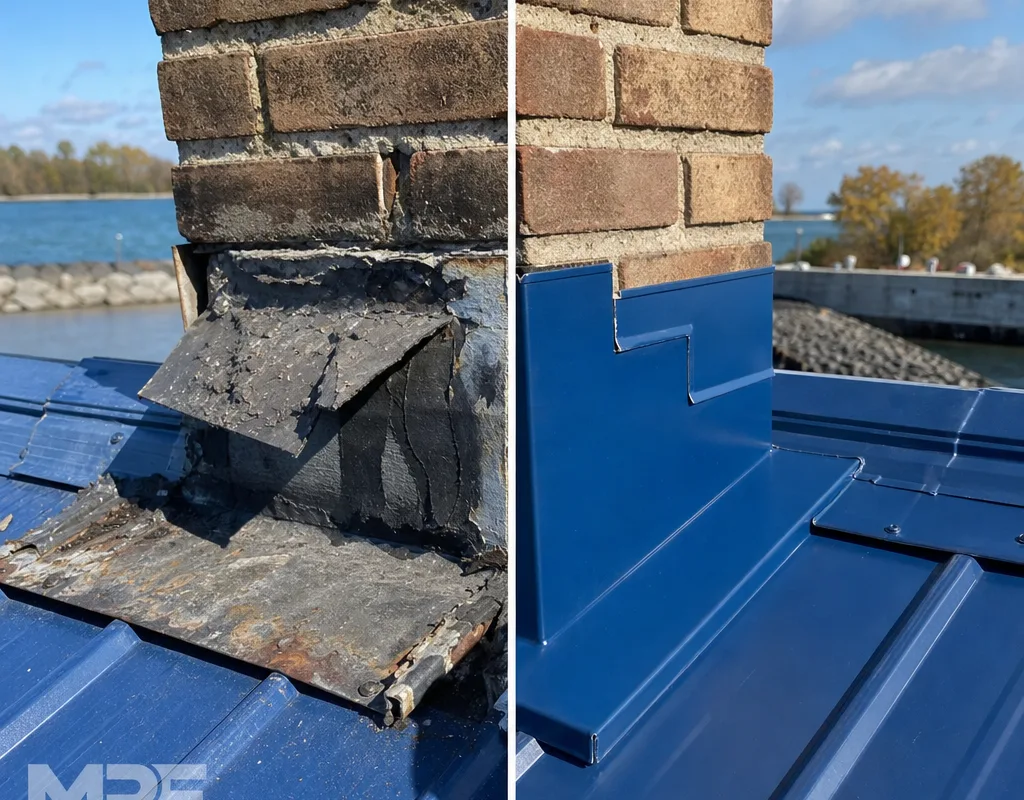
Many leaks come from step flashing, counterflashing, drip edge, and valley problems. We repair to a water-shedding detail, not a patch that traps water.
Asphalt shingles, standing seam, exposed-fastener metal, and flat or low-slope membranes all require different repair methods and compatible sealants.
We look for lifted tabs, backed-out nails, missing caps, and edge details that can fail during Lake Erie wind events and winter icing.
You get a written explanation of what is damaged, what we recommend repairing now, and what can wait if it is still serviceable.
We protect landscaping and keep debris under control, especially on tight city lots where access and cleanup matter.
Failure points and causes
Roof leaks in Erie often come from details, not the big open field of the roof. A few of the most common repair calls we see:
We repair what is failing and check the surrounding area for the same condition, because a single visible leak often means nearby details are close to failing too.
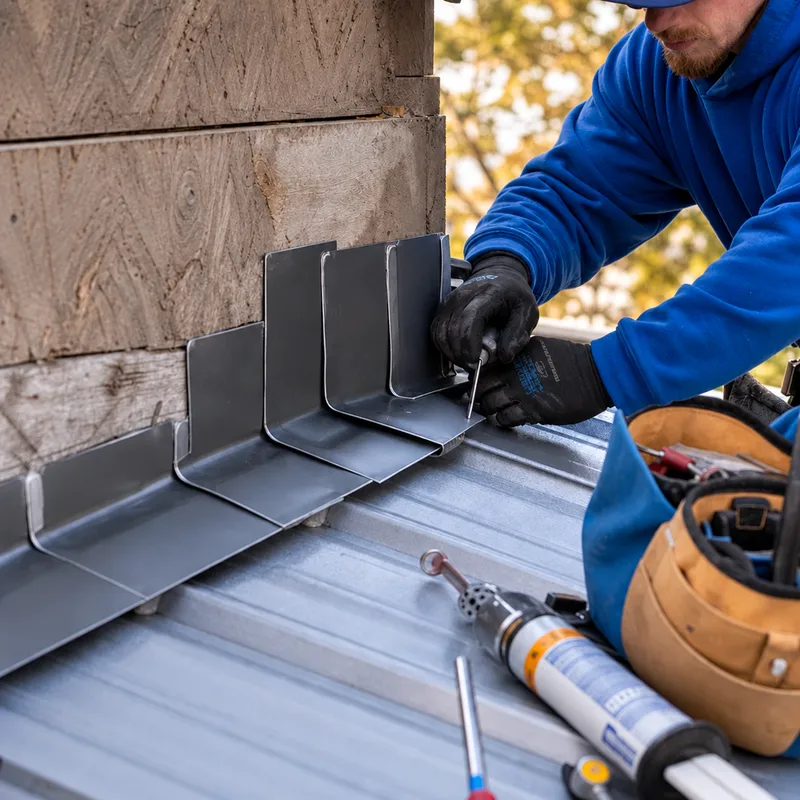
Inspection to completed repair
A defined process helps separate the visible symptom from the actual failure point and keeps the repair scope clear.
We start with a roof-surface inspection and a quick interior check when helpful. We set ladders and fall protection based on roof height, pitch, and access.
We look at the most likely entry points first: penetrations, flashing, valleys, roof-to-wall transitions, and storm-damaged areas. We document what we see so the scope is based on conditions, not guesses.
You get a clear explanation of what needs repair now, what is optional, and what would be a temporary patch versus a durable fix. If repair is not the right long-term move, we explain why.
We use roof-appropriate fasteners, underlayment where needed, flashing metals, and sealants that match the roof system. The goal is proper overlap and water shedding, not heavy caulking.
We re-check the repaired area, scan adjacent details, and clean up. On shingle roofs, that includes a careful sweep for loose granules and debris around access points.
Planning your repair budget
Most roof repair in Erie typically ranges from about $250 to $1,500, with small fixes like replacing a few shingles or a pipe boot often at the low end, and larger flashing or leak-tracking repairs landing higher. Complex leaks, steep roofs, limited access, multiple problem areas, or repairs that require removing and re-installing surrounding materials can push totals above that range.
Your final price depends on roof type, pitch, number of stories, how far water has traveled, whether decking or fascia has damage, and the materials needed to restore proper flashing and underlayment. Exact costs are confirmed after an on-roof inspection and a written scope.
Built for Erie conditions
Erie homes see fast weather changes. Wind off the lake can drive rain up-slope and sideways, which exposes weak flashing details that might stay dry in calmer climates. Winter brings ice and freeze-thaw cycling, which can open small gaps at penetrations and along roof edges.
We also work on plenty of older housing stock in and around the city where roof transitions were built to older standards or have been re-roofed multiple times. Layering new shingles over old flashing, or reusing worn vent boots, is a common reason repairs show up a year or two later.
If you are comparing options or want to understand what a repair may look like for your roof type, you can start with an overview of our work at Metal Roofers.
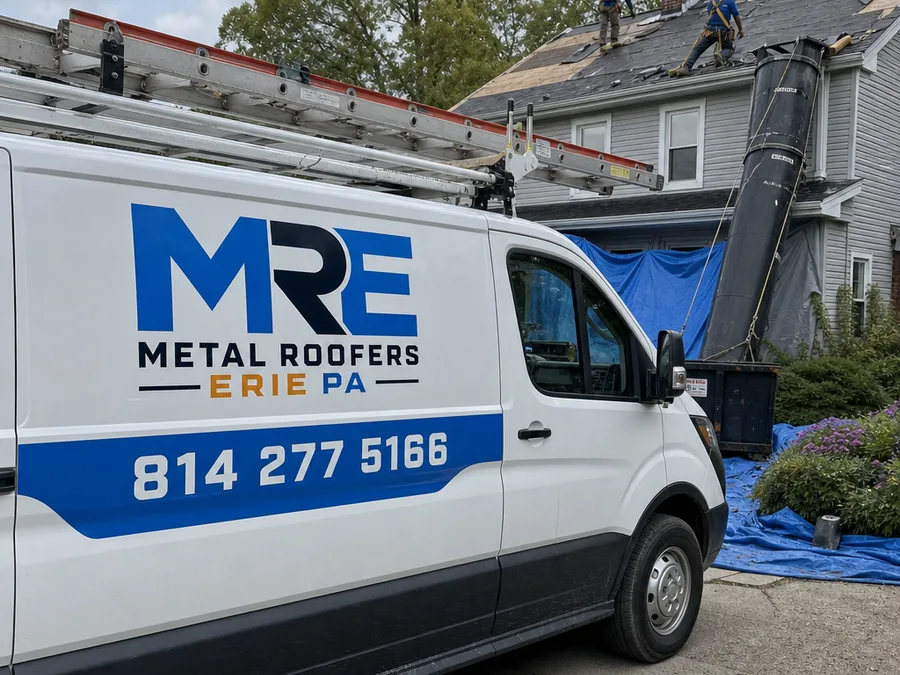
Workmanship in view
Answers before repair begins
For active leaks, the priority is a same-day or next-available inspection so the entry point can be contained and properly repaired. Weather and roof safety determine whether we can complete a permanent repair immediately or start with temporary containment and return for the full fix when conditions allow.
No. Water can enter at a flashing point or penetration and travel along decking, rafters, or insulation before it shows up indoors. That is why leak repairs start with checking common entry points such as valleys, chimneys, vents, and transitions rather than repairing the spot that looks closest from inside.
In many cases, yes. Metal roof leaks are often tied to penetrations, termination details, failed closures, or fasteners and washers that have loosened over time, and targeted repair can restore water tightness. The best approach depends on whether the issue is localized or present broadly across the roof.
A temporary patch usually relies on surface sealants or tape to slow water entry, which can be useful during bad weather but is not a long-term detail. A durable repair restores the system by correcting flashing overlaps, replacing failed components, and tying materials together so water sheds properly.
Yes. Wind can lift shingle tabs, break seals, and expose nails. The repair typically includes replacing damaged shingles, re-securing edges when appropriate, and checking nearby areas for similar lift. If debris impact is involved, we also inspect for punctures and compromised flashing.
Protect the interior: place a container under the drip, move valuables, and, if you can safely do so, relieve pooled water in a ceiling bubble by making a small drain point into a bucket. Avoid going onto the roof in wet or windy conditions; diagnosis and repair are safer with proper access and fall protection.
Start with an on-site inspection
Tell us what you are seeing and when it started. We will schedule an inspection, explain the likely cause, and provide a written plan to restore your roof's protection.